

A few weeks into our marriage, my husband and I left our home country for a tiny village in rural Zambia. I was set: I had devoured the stories of faithful men and women who followed God into hard places and saw him work in remarkable ways. Naturally, I assumed that choosing to live in a forgotten settlement among the rural poor meant God would also work powerfully through us. I couldn’t wait to dazzle my new husband with an ease I was sure to possess around these village kids. He would fall more in love with me as he witnessed how well I loved them, and show his admiration as I taught science with proficiency and prowess.
There was only one problem—my personally curated training program had failed to consider a few key details. I had never lived in Africa. Never lived in a culture different to my own. And I had never taught science.
The illusion shattered almost immediately, and I fell hard, especially in those early months. It turns out that not sharing a common language and, instead, trying to communicate an intense godly love with your eyes can only get you so far (in my case, it got me a straw hat from a very old man who lived close by, but that was about it).
In addition, I was at best a very average science teacher. Instead of celebrating miraculous moves of God, I regularly found myself in tears. In those eighteen months, I wrestled with some big questions around identity and calling. I wondered if I had managed to fast for forty days instead of two, perhaps that would have been the catalyst for revival in the village.
I had left behind a good degree, meaningful work, a church family, and amazing friends to be in this unmarked settlement, and it didn’t look quite so romantic anymore.
It’s now fifteen years later and I have fallen many more times, but it was that first experience that forced on me a new posture. My younger self assumed the best kind of obedience to Christ would look impressive, and the cost of following him would be dramatic. Over time, perhaps in part through the deep privilege and challenge of motherhood, he has drawn me closer to him—into an abiding that is more ordinarily marked by simplicity, vulnerability, and hiddenness. From here the cost of following Jesus has become something more subtle—a kind of cost that doesn’t sound exciting and isn’t something you’d write about in a prayer update, but demands every part of me.
Although power cuts, fuel shortages, insecurity, and constant bouts of diarrhea are challenging, the true cost has been his asking me time and again to trust him as I lay down my skills, giftings, and identity—to die, and allow him to breathe resurrection. Sometimes it can feel like someone has punched me in the stomach, as I question whether I have thrown my life away to remain hidden in an unknown corner of the world, perhaps also screwing up my kids in the process in this potentially excessive expression of faith.
And yet, it’s only been in the dying that I have glimpsed his glory.
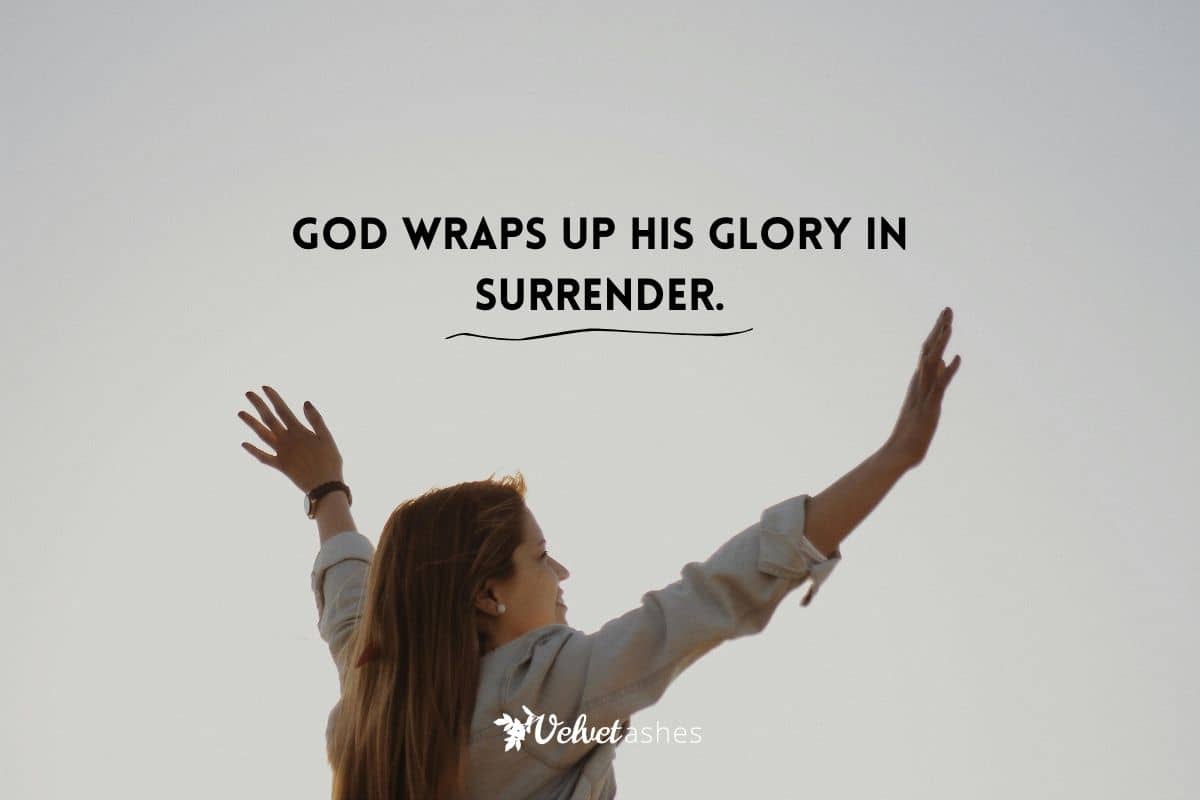
I often find myself returning to Mary and wondering at her words in the stunning Magnificat. Out of nowhere we meet a young girl who is declared by the angel as highly favored, even as she is asked to lay down her love, reputation, and secure future: a life turned irrevocably upside down, relationships permanently damaged, and the unthinkable prospect of watching her beloved son be killed. Yet it was in her humble acceptance of these wild words from a ball of light that the glory of God came to dwell—literally—in her body. God wraps up his glory in surrender.
Our Savior whom she bore even now bears wounds upon his body, reminding us only through his suffering and death was there resurrection—because Christ is risen we live in a new order of things in which death flows into life. The pattern we share with him asks us to trust that there is life in the laying down—in the tiny deaths of each day—for me, for my husband, and for our children.
The cost of following Jesus is nothing less than death. I pray wherever I am in the world, I am found worshipping at his pierced feet—and from this posture of vulnerability and brokenness, I am pierced with splinters of glory and cry out with Mary and the countless saints who have walked before me:
My soul magnifies the Lord,
and my spirit rejoices in God my Savior,
for he has looked on the humble estate of his servant.
For behold, from now on all generations will call me blessed;
for he who is mighty has done great things for me,
and holy is his name.
Luke 1:46–49 (ESV)
In what hidden or ordinary places of your life might God be inviting you to trust that resurrection begins in small daily deaths rather than dramatic moments? How might this change your perspective of the season of life you find yourself in?








2 Responses
wow!! You almost brought me to tears!!
You expressed so well how the serving in unseen ways can be so tiring but that is exactly what I think the death that Jesus calls us to is like.
I too have left behind a good career, a good education, and other things but I enjoy what I do here, it’s much more meaningful.
Thank you for putting words to my experience. It’s so often hard to express what the difficulties are and what life is like overseas, especially after 12 years when the newness has worn off.
Thank you
Thanks Bonita, I appreciate your kind words.
I think, at least for me, I had really only heard the hard part of overseas mission life were the obvious things – sickness, insecurity etc: what you read in books or hear from the stage. I wasn’t ready for the plodding, the quiet but faithful obedience, the hiddeness. But when I surrender myself to His presence in that place, I am confident I am on holy ground.