
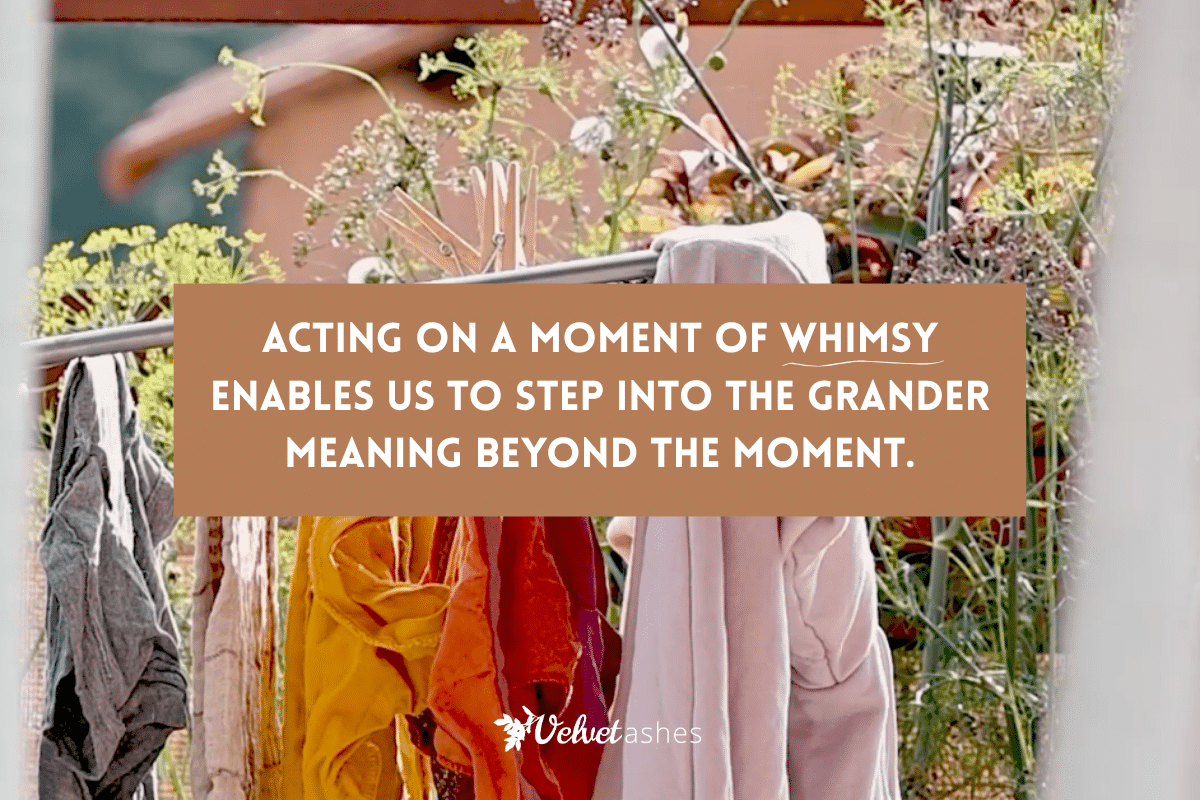

Over the past few years, my evening ritual of bringing our laundry outside to the washing machine in the corner of our concrete compound has been accompanied by a conversation with a montane nightjar. The last night in our home was no different; as I stuffed towels and muddied kids’ clothes into the drum, the nightjar threw out its lilting, trilling call. I had a lot to do, but I paused, returned the call, and listened for its reply.
I’ve just come through a six-month slog of heaviness carrying unexpected griefs, struggling to balance ministry and family needs, all topped off with packing up over a decade’s worth of living in our host country and preparing to move to the next. What does whimsy have to do with these wearying seasons? With the heavy ones?
While the word whimsy suggests flightiness and frivolity, I believe the Christian experience of whimsy cannot be separated from something that grounds it with an eternal weight, something we call joy. Just as joy is not rooted in our circumstances, but rather in who God is and confidence in his goodness towards us, whimsy involves keeping both our physical and spiritual senses attuned to recognize and receive the goodness of God all around us. It means practicing a posture of openness to notice and enjoy the ways God is present.
Now, as I look back over the season behind me, I see the ways God sustained me. Some are not surprising: worshiping with my church family, prayer meetings, and gathering with friends for a meal. But also, embracing opportunities for whimsy. Those other things came once a week or once a month. But the whimsical was offered throughout the day, every day. It might have been the decision to take my morning coffee outside and noticing the shape and translucence of leaves warming in the waking sunlight, letting me bask in the creativity of our Creator. Or stopping for thirty seconds to listen to a strangely familiar piping somewhere down the road and allowing myself to remember hearing the same music our first month in our host country, thereby rejoicing in the beauty of different cultures, a beauty that reflects God’s own.
A paraphrase of something Tolkien wrote in “On Fairy-Stories” is applicable here. In response to accusations that his works were escapist, he said that we think differently of the person who finds themself a prisoner and is then able to escape. For Tolkien, it was fairy stories that countered both a culture’s darkness and the daily dulling of our joy due to overfamiliarity and, instead, allowed an “escape” back into the reality of God’s goodness, truth, and beauty.
An openness to whimsy does the same thing. There are seasons when our daily work leaves us feeling utterly depleted, numb to anything beyond what needs to be done. But by choosing to notice the little gifts around us and act on the invitations to delight in God’s creation and creatures, we catch a glimpse of what really is true. Acting on a moment of whimsy enables us to step into the grander meaning beyond the moment. It not only reminds us that God’s goodness is real, it gives us a way to experience his goodness and be renewed by his presence.
The first verse of Psalm 63 runs,
“O God, you are my God; earnestly I seek you;
my soul thirsts for you;
my flesh faints for you,
as in a dry and weary land where there is no water.” (ESV)
Journeying through difficult seasons of life and service can feel like being in a dry and weary land. Once a week when we gather at church, we receive a cupful of renewal. But thankfully, renewal is not limited to once a week: our generous Father has sprung little springs everywhere. This is his world. His life and love are the fabric from which it is woven. If we train ourselves to notice and engage, we’ll discover there are streams that remind us of his kindness, dew drops that extend his beauty to us, and surprising rivulets that reflect the reality of his faithful work in this world.
These small, humble moments are there for our refreshment, if we are intentional to welcome them. It will look a little different for each person. For me, it means leaving out books of poetry. It means stepping outside to notice some aspect of creation. And, sometimes most challenging of all, it means conscientiously asking myself when a child interrupts with their two-year-old silliness or thirteen-year-old earnestness, whether I can take one or two minutes to truly engage with them in it. It may seem counterintuitive to plan to be whimsical. But if we are intentional to identify ways we can embrace the whimsical and make those ways a part of our daily practice, we will find ourselves being surprised and refreshed again and again by the presence of God.
I’ve discovered that my joy can rise even as my voice rises with the soaring call of a nightjar.
Looking back on a challenging season, where do you see moments of whimsy that God offered you as a gift to lighten your load?
Think about areas of your life that currently feel depleted. What are one or two ways you can invite whimsy into them?












One Response
going to get ice cream after dinner spontaneously is something I should do a bit more of!