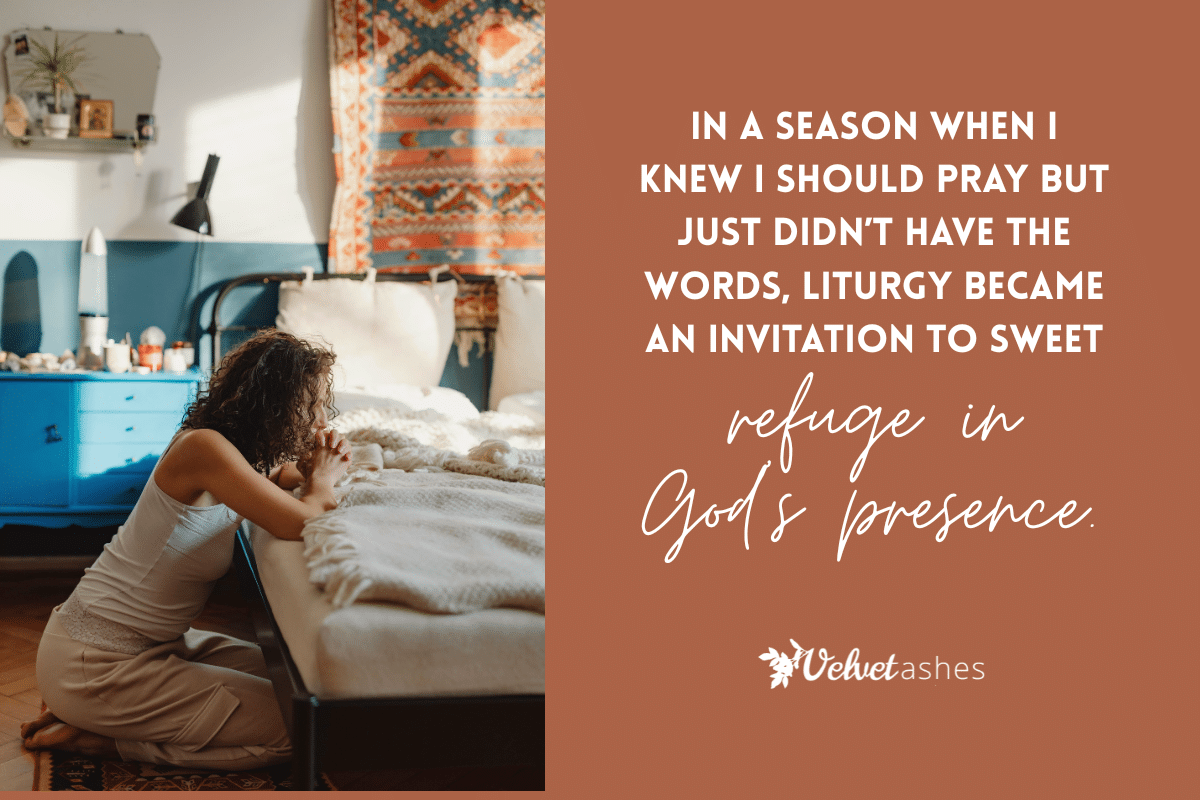

When I was a little girl, I would kneel by my bed at night when saying my prayers. In my nightgown, knees pressed into the carpet, surrounded by stuffed animals and the safety of my home and family, my prayers mostly consisted of asking God for things.
God, bless Mommy and Daddy.
God, be with my grandparents.
God, give me a baby sister.
Or at least a puppy.
As I grew, so did my prayers. In my young adult years, they expanded to include a wider view of God and a wider vocabulary of conversing with him. I learned to praise him, to thank him, to entrust my deep desires and needs to him, to confess my sins and doubts to him, to delight in just being with him. I wasn’t always consistent with the practice of prayer, but I was learning to prioritize it. I listened to how others prayed and was influenced by the sincere prayers of older saints. I especially loved the way my grandfather seemed to always be talking to God, just a never-ending conversation that I got to eavesdrop on when he would spontaneously murmur Thank you, Jesus throughout his day.
When I became a young mom, choppy prayers were inserted into whatever rare moment of quiet I could find. In the shower, during a nighttime feeding, while my kids slept in their car seats, after bedtime, or early in the mornings when the house was still quiet, I would fight to get a few moments with Jesus, just him and me. Those moments were like a balm to my weary, sleep-deprived soul.
Then we moved abroad, and suddenly the struggle to pray wasn’t just in finding time to be with Jesus, but in knowing what to say to him. The new language I was learning, the new surroundings I was adjusting to, the new grief I was experiencing all seemed to compete with my desire to stay in fellowship with Christ, and I would find myself at a loss for words, not knowing what to pray or how to articulate my experiences and emotions. I was struggling with jealousy and loss, wondering why a “good” God would ask me to do such a hard thing that cost me so much.
In a season when I knew I should pray but just didn’t have the words, liturgy became an invitation to sweet refuge in God’s presence.
Praying prayers written by others got me “unstuck” in my relationship with Jesus. Realizing that the Lord could commune with me in prayer, even when it was simply reading a psalm or reciting a liturgy, became such a lifeline for me. When my brain was tired from culture fatigue or language learning, when I didn’t know how to put into words the depth of grief I was feeling, when I just wasn’t sure where to start in prayer, liturgy was a gentle nudge to move me into Christ’s presence.
“This I declare about the Lord: He alone is my refuge, my place of safety; he is my God, and I trust him.” Psalm 91:2 (NLT)
In his kindness and mercy, the Lord took my love for writing and put an idea in my heart to write prayers for those like me, living between two worlds, never fully belonging to one or the other. I began to write and share liturgies for those living abroad, and as I did, I happened upon a whole global community of people longing to find refuge in Christ as they made their homes on foreign soil. This family of sojourners, travel weary and tongue-tied, longed to unburden their hearts in the presence of Jesus; they just needed a little help and encouragement to do so.
While I was writing liturgies for others, I discovered something unexpected—this practice of writing prayers became a way for me to process, pray through, and heal from the many griefs, losses, transitions, and challenges I experienced in my years of sojourning. As I set aside time to intentionally think and write about common experiences of the global worker like saying goodbye, packing, homesickness, and language learning, the Spirit was able to uncover deep beliefs, narratives, and hurts that needed to be brought out into the light of Christ’s presence so he could bring restoration and healing. The practice of liturgy writing created this safe place of refuge for me to lay my heart bare so the Lord could bring true healing and freedom. What a joy it has been to develop and share that practice with other sojourners in hopes that they, too, can experience the power of God’s presence at work as they process life abroad through prayer.
I have come a long way from those bedside prayers as a child, but the God who invited my simple prayers then still invites my honest, complex, unfiltered prayers now. Though the language of my prayers has changed, the One who hears them hasn’t. He welcomes us into his loving presence to say whatever is on our heart and to hear his heart. The sacred space of prayer has become my steady place of solace and healing, my anchor in all the transitions and changes this life brings. My hope is that, like the psalmist, we would heed the invitation of the Lord to his safe refuge of prayer and communion and find that, no matter what we are going through, just a little talk with Jesus makes it right.
“My heart has heard you say, ‘Come and talk with me.’ And my heart responds, ‘Lord, I am coming.’” Psalm 27:8 (NLT)
How has prayer changed through the different seasons of your life?
Heather Fallis is the creator of Liturgies for a Life Abroad, co-author of Liturgies and Laments for the Sojourner, and most recently published Crafting Liturgies for Life Abroad: A Guide to Processing Cross-Cultural Life Through Written Prayer. You can find more about her and her writing and resources at www.liturgiesforalifeabroad.com.