

Long after my family is asleep, I lie in bed with tears welling in my eyes. Lately, I have wondered, sometimes aloud in a kind of whispered desperation, “How long, Lord? Who will plead this case?!” Even through my tiny part in the age-old pursuit of justice, I’m worn weary and thin. Splintering thoughts of helplessness are my frequent visitors.
Since returning to my passport country nearly three years ago, I have taken the lessons I painfully learned on the field about abuse of various kinds and hoped to apply them in my more immediate “home” context. In its wake, abuse leaves untold devastation spiritually, emotionally, and physically. Yet a poor response from people in authority exponentially exacerbates these myriad effects. On the field and in other parts of life, I have seen mistreatment handled well, opening the door to healing. I have also witnessed harmful responses causing a kind of secondary abuse, which can wound even more deeply than the first. By taking up anti-abuse advocacy during my re-entry, I was ultimately determined to help equip leaders to learn a better response to abuse in the hopes of sparing others from the debilitating suffering of being hurt and not helped by the very people they thought they could trust.
I naïvely assumed people with authority just didn’t know this. Recently, though, I came across a quote from Dr. Dan Allender recounting his early years of writing and teaching about abuse: “At that time [the late eighties, when he began] it was assumed that informing people about the diabolical damage of abuse would decrease the likelihood that it would continue to occur at the same rate, and I wanted that outcome with a passion” (Healing the Wounded Heart).
Sadly, I’ve already seen his point, as both abuse and the harmful responses to it continue in perpetuity. There sometimes exists among leaders a seething hostility to even gaining awareness that I will never understand. Over time, I have realized that some may never engage with these issues, being either unwilling or unable to enter into the particular kinds of suffering that are caused by the injustice of abuse. Though Jesus has entered into human suffering through his incarnation and crucifixion, conquering all manner of death through his resurrection, some days it feels impossible for me to continue to enter in among those who have the power to act yet won’t—or can’t. Who will plead this case?!
The encounters with evil also weigh heavily on me . . . the stories that will continue to be borne by the people they have affected through the course of their entire lives. It’s a real risk that I might become hardened to this evil through exposure and being overwhelmed—I have had to grow in my own awareness of the need to periodically step back and place precautions as guardrails for my engagement.
I have also learned to add the appreciation of the God-given gifts of beauty and goodness into the routines of life as a very real antidote against great evil. By tuning in, I have seen that evil is great, yet beauty is even greater. All I have are small glimpses, but I am convinced that the joy, delight, and provision I have received through the trust, camaraderie, and encouragement of others in this pursuit are from the hand of God, reminding me that especially in this work, the people are the point—the beautiful ones that God delights in, each of us imaging God in ways only we can (Psalm 16:3). As I seek and find incredible beauty, I’m reminded that Jesus’ ascension took him to the right hand of God, where he reigns over all this, even now.
Through God’s presence in beauty and the courageous resolve of others, I am amazed and bolstered, restored to hopefulness once more. I’ve wondered if I might be chewed up and spit out, and I’ve wondered whether I might burn out (again). My own faith is regularly stretched beyond reason, somehow persisting in hope. Daniel Nayeri beautifully conveys the power of hope, writing that it is “the anticipation that the God who listens in love will one day speak justice” (Everything Sad Is Untrue). It is this hope that fuels me, not to achieve anything remarkable, but to continue on, one step at a time, grieving each devastation of evil and rejoicing over each bit of beauty, stubbornly believing that through the justice of Jesus, it will all one day be made right.
In bed, I go from racking my brain about which leaders to invite into this work to wondering the context of that insistent question, “Who will plead this case?” I pull up a Bible app for the reference when my memory fails me, and quickly find what I had only partially recalled:
“Do not rob the poor because he is poor,
Nor crush the needy at the gate;
For the Lord will plead their case
And take the life of those who rob them”
Proverbs 22:22–23 (NASB).
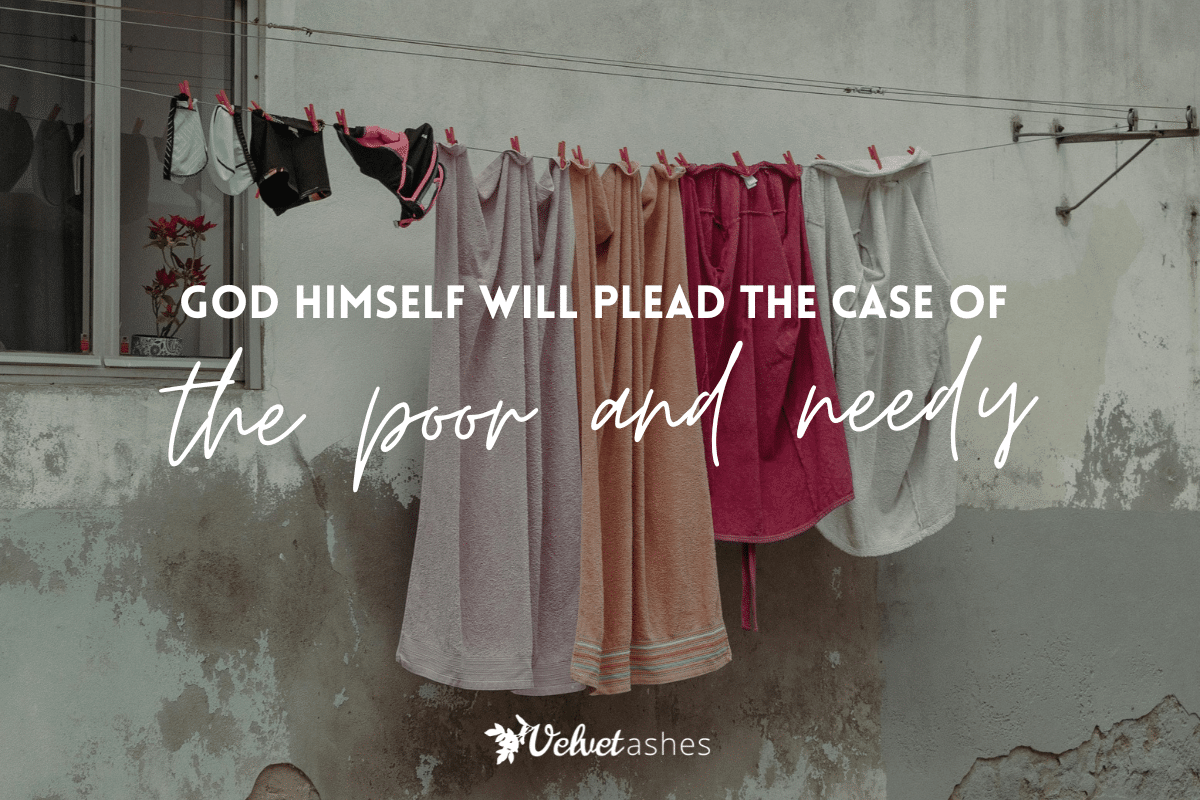
My tears evaporate as I let out a small chuckle—I had been asking God what other leaders might be raised up, those with eyes of faith to plead for justice, those who will take meaningful steps to help me as I try to help others, but I had remembered the verse incorrectly. God himself will plead the case of the poor and needy. God himself stands against injustice—providing the people, justifying the hope. The promise is still being fulfilled and has been there for me all along.
Have you had an experience of hopefulness beyond reason in your work? What has bolstered you in times of overwhelming discouragement?